Community Led Project to Transform Historic Passage into Biodiversity & Food-Growing Hub
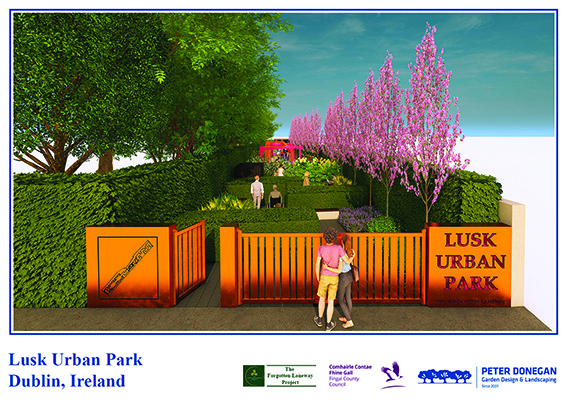
A once-forgotten laneway in the heart of Lusk is set to become the town’s first Urban Park, with the design unveiled at a public meeting on Saturday 21st February in the Lusk Cultural Centre.
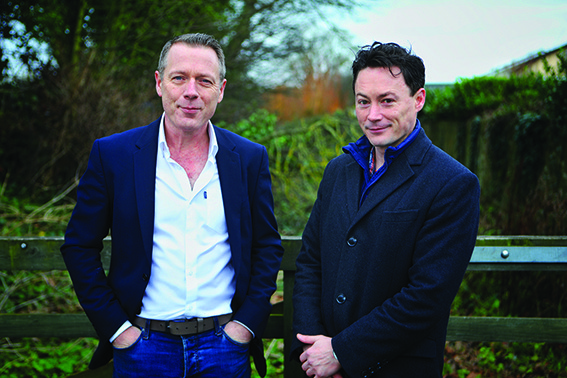
The Forgotten Laneway Project began over two years ago when local resident Mark Boland envisioned transforming the neglected passage into a vibrant community space. He was soon joined by two other Lusk residents, Colin Browne and Tara Ryan, and together they set about turning the idea into a deliverable project with the help of Fingal County Council.
The laneway itself forms part of Lusk’s layered history. Over the decades it served multiple purposes within the town including its use by the British Army to access the local remount farm, where horses were trained and prepared for service across the British Empire. Following the construction of the town’s ring road, the route fell into disuse and gradually became forgotten. Now, it is being reimagined as a future-focused community space.
The project team have worked closely with Fingal County Council community department and were granted a licence for the laneway in 2025. A key element of the initiative is the development of a genuine circular economy model. Food scraps from the adjacent HSE community facility will be converted into nutrient-rich compost and used in the park’s raised growing beds where local families will get to grow food sustainably within their own community. This approach reduces waste, supports soil health and promotes sustainable growing practices. After extensive consultation and planning, the team secured €52,000 from the Climate Action Fund, which will be used to enhance biodiversity and promote food growing within the new park. The Climate Action funding also included €12,000 for sustainable lighting for Lusk Athletics, allowing winter training to continue under energy-e icient floodlights. A further €50,000 was secured under the Community Recognition Fund, providing the capital required to start the transformation of the laneway.
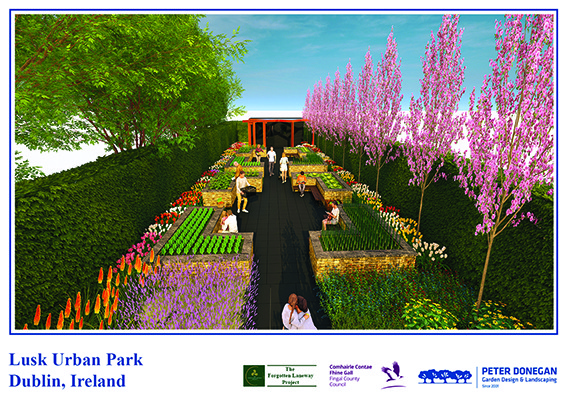
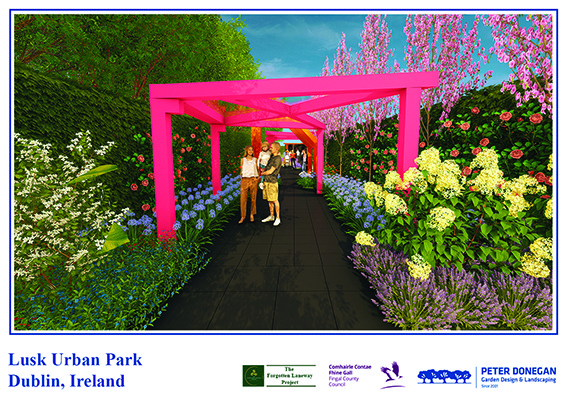
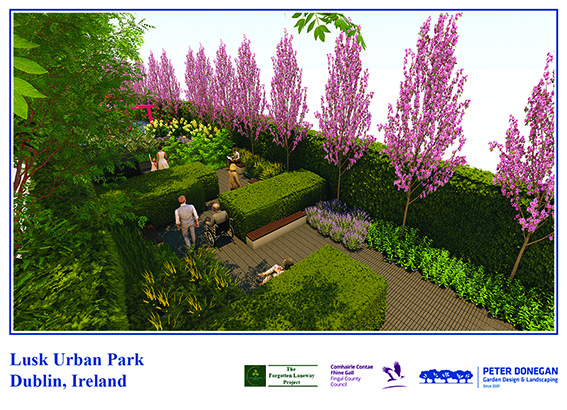
With initial funding in place, the group commissioned award winning garden designer Peter Donegan MSGLD to create a design that is inclusive, accessible and biodiversity-rich. The proposed park includes raised growing beds, native planting, pollinator friendly features and community gathering spaces. Accessibility has been central to the design, ensuring the space can be enjoyed by people of all abilities.
Also, as part of the development, a competition will be launched among local art students in the town of Lusk to design a permanent centrepiece for the new Lusk urban park. A donation of €5,000 from the local Tidy Towns has been allocated to create an installation celebrating their 45 years in Lusk and honouring the extraordinary work of the original committee whose e orts helped shape the town.
The unveiling of the designs was held on the 21st of February in the local Cultural centre in Lusk and gave residents an opportunity to view the design, meet the project team and learn how to become involved. The Forgotten Laneway project team hopes the park will serve not only as a green space, but as a wonderful example of sustainable urban regeneration.